
Burnout Recovery: Why You’re Exhausted and How to Recover

Understanding burnout recovery starts with recognizing why you feel so drained in the first place.
When exhaustion feels constant and motivation disappears, your body and mind are often responding to prolonged stress rather than a lack of effort.
In many cases, people try to fix burnout by resting more or pushing harder. When that approach fails, frustration naturally sets in. True recovery, however, requires more than rest alone. It involves restoring balance to your nervous system, energy levels, and sense of control.
The encouraging news is this: recovering from burnout is possible. With the right information, realistic expectations, and steady changes, energy can return and life can begin to feel manageable again.
TL;DR — Key Points
- Burnout is caused by prolonged stress, not a lack of effort.
- Recovery takes time because the nervous system needs to reset.
- Healing happens in stages, starting with awareness and rest.
- Consistent, low-pressure changes restore energy more effectively than pushing harder.
- With realistic expectations and support, full recovery is possible.
Table Of Contents
- Burnout Recovery: Why You’re Exhausted and How to Recover
- What Is Burnout and Why Recovery Takes Time
- Burnout Symptoms You Should Not Ignore
- Burnout Recovery Stages: What Healing Usually Looks Like
- How Long Does the Burnout Healing Process Take?
- Burnout Recovery Strategies That Support Real Healing
- Job Burnout Recovery While You Are Still Working
- A Simple Burnout Recovery Plan You Can Follow
- Preventing Burnout After Recovery
- Final Thoughts: Recovery Is Real and You’re Already on the Path
- FAQ
What Is Burnout and Why Recovery Takes Time
In simple terms, burnout is a state of chronic physical, emotional, and mental exhaustion caused by prolonged stress. In many cases, it develops gradually, which makes early warning signs easy to miss.
Unlike regular tiredness, this level of exhaustion does not disappear after a few days off. Instead, the stress response system remains activated for too long. As a result, the body stays alert even when it should be resting.
Over time, recovery often feels slow because the nervous system needs to relearn how to relax. This process cannot be rushed, but it can be supported with consistent care.
Burnout Symptoms You Should Not Ignore
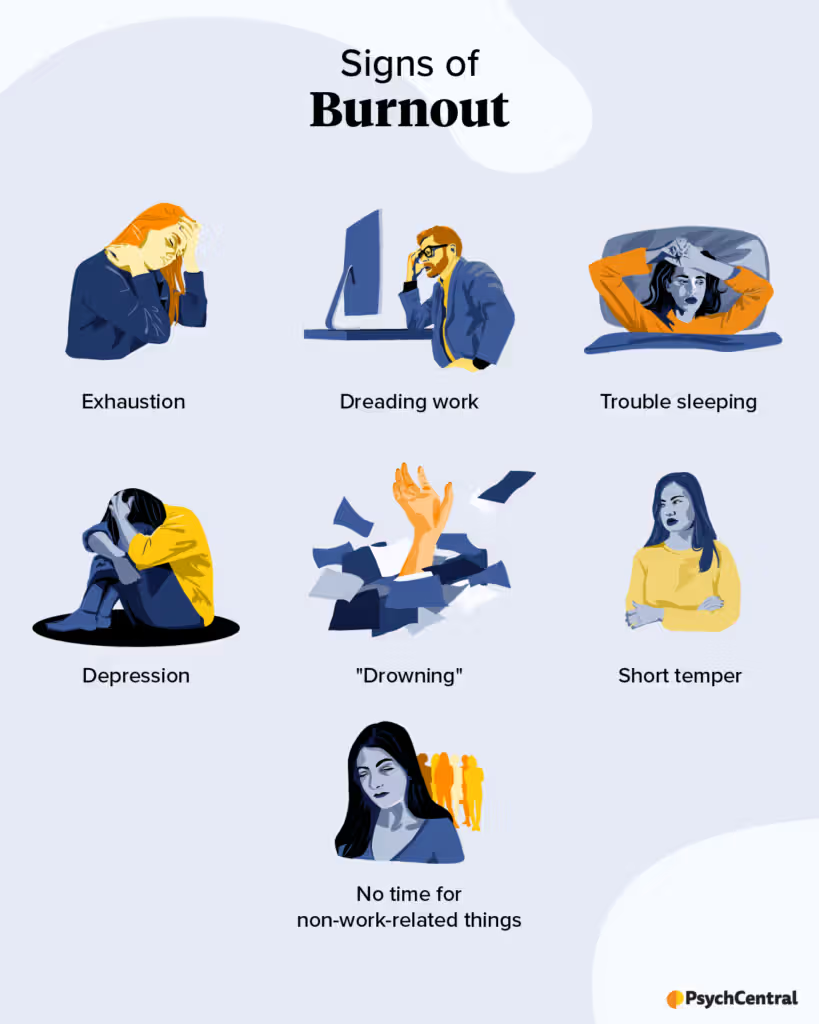
The most important thing to understand is recognizing burnout symptoms is a critical step in healing. Many people dismiss early signs until they become overwhelming.
Common burnout symptoms include:
Persistent fatigue that does not improve with sleep
Difficulty concentrating or mental fog
Emotional numbness or irritability
Loss of motivation or enjoyment
Feeling detached from work or daily life
Trouble sleeping or frequent physical tension
If several of these feel familiar, your exhaustion likely has a deeper cause than overwork alone.
Burnout Recovery Stages: What Healing Usually Looks Like
Recovering from burnout rarely happens all at once. Instead, most people move through several stages as energy and clarity return.
Awareness
This stage begins when you acknowledge that something is wrong. At this point, self-blame fades and the experience is recognized for what it is.
Rest and Stabilization
This matters because during this phase, pressure is reduced where possible and basic needs such as sleep, nutrition, and emotional safety take priority. Initially, this stage can feel uncomfortable.
Nervous System Reset
Over time, the body learns that it is safe to relax. Mood changes or lingering fatigue may appear as the system recalibrates.
Rebuilding Energy and Meaning
Mental clarity improves and motivation returns in small ways. Interests and values beyond constant productivity begin to resurface.
Long-Term Resilience
Eventually, habits and boundaries are established that protect energy and reduce the risk of future burnout.
Understanding these stages helps normalize the recovery process and prevents unrealistic expectations.
For a faith-centered perspective on rest and quieting the mind, you may find our guide on biblical stillness helpful.
How Long Does the Burnout Healing Process Take?
Over time, burnout healing time varies depending on the individual and their circumstances. There is no universal timeline.
In mild cases, improvement may appear within a few weeks. More severe burnout, however, can take several months or longer. Factors that influence recovery time include:
Duration of stress exposure
Ongoing work or life demands
Quality of rest and support
Ability to reduce pressure
Overall health
For most people, progress happens gradually. That said, consistent improvement matters far more than speed.
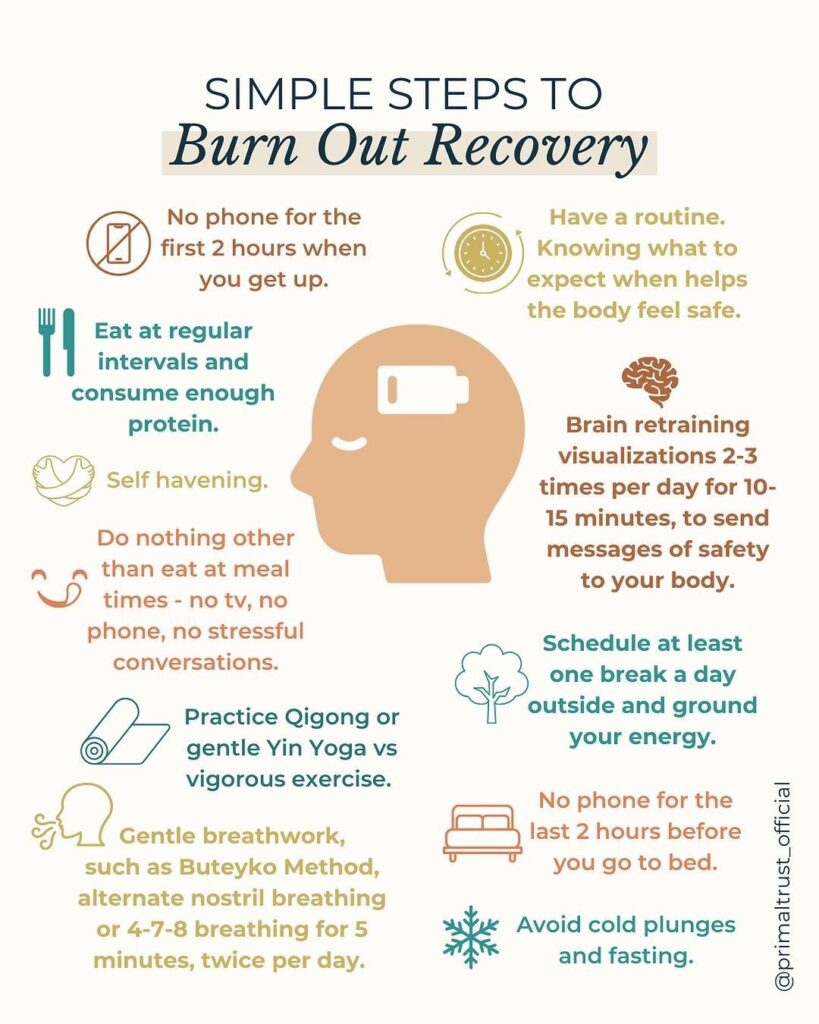
Burnout Recovery Strategies That Support Real Healing
Effective strategies focus on restoring capacity rather than forcing performance.
Reduce Non-Essential Stress
Identifying tasks or commitments that can be paused, simplified, or delegated creates space for recovery.
Stabilize Daily Basics
Consistent sleep, regular meals, hydration, and gentle movement provide a foundation for healing. Without these basics, progress is harder to sustain.
Create True Mental Rest
Because constant stimulation keeps the nervous system activated, quiet time and low-demand activities become essential.
Rebuild a Sense of Safety
Spending time with supportive people or in non-judgmental spaces helps the body relax and recover.
Talk Through the Experience
When emotional pressure is shared, burnout often improves. Speaking with a trusted person reduces isolation and mental load.
If changing environments helps you reset mentally, this mindful living travel guide shares practical insights.
Job Burnout Recovery While You Are Still Working
Job-related burnout can feel especially difficult when stepping away from work is not an option. Still, recovery remains possible within realistic limits.
Helpful steps include:
Setting clearer work boundaries
Reducing unnecessary overcommitment
Allowing breaks without guilt
Adjusting expectations around perfection
Separating self-worth from productivity
Even small changes can significantly reduce strain and support healing.
A Simple Burnout Recovery Plan You Can Follow
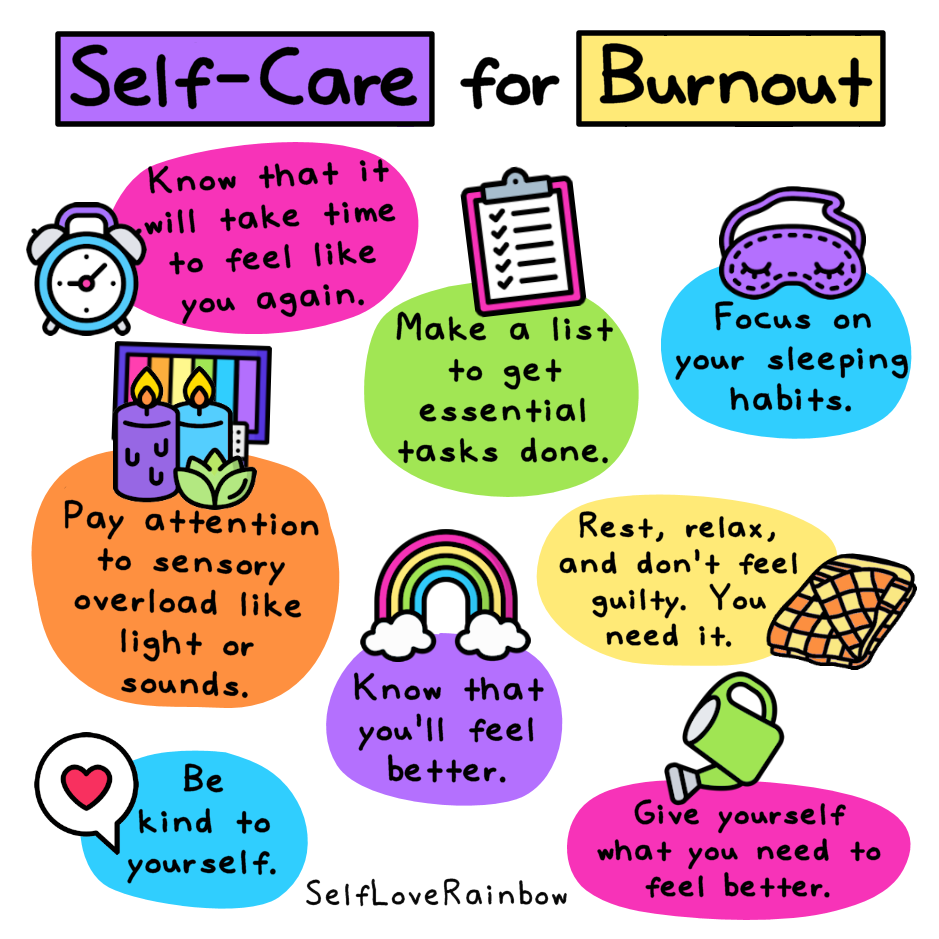
A burnout recovery plan does not need to be complex. In fact, simpler plans are often easier to maintain.
A realistic approach includes:
Acknowledging burnout without judgment
Reducing pressure where possible
Restoring sleep, food, and movement routines
Scheduling daily moments of real rest
Gradually rebuilding meaning and enjoyment
Establishing boundaries that protect energy
Starting with one or two steps is enough. Over time, steady action leads to progress.
Preventing Burnout After Recovery
Healing does not end when you begin to feel better. Prevention helps maintain progress and protect long-term well-being.
Helpful prevention habits include:
Regular self-check-ins
Saying no earlier and more clearly
Treating rest as essential rather than optional
Letting go of constant urgency
Adjusting demands when stress increases
Ultimately, prevention is about responsiveness, not perfection.
In Summary:
- Burnout is a physiological stress response, not personal failure.
- Recovery happens gradually through safety, rest, and reduced pressure.
- Pushing harder delays healing; consistency supports it.
- Most people recover fully with time and sustainable changes.
Final Thoughts: Recovery Is Real and You’re Already on the Path
Burnout recovery is not about becoming tougher or more disciplined. Instead, it focuses on restoring balance so the body and mind can recover.
If burnout symptoms have been recognized and small changes are already underway, healing has begun—even if progress feels slow. Often, recovery unfolds quietly through steadier energy, clearer thinking, and moments of calm returning.
Burnout is not a failure. It is a signal that something demanded too much for too long. With time, rest, boundaries, and support, people do recover. Life becomes lighter again.
FAQ
What is burnout recovery?
Burnout recovery is the process of restoring energy, emotional balance, and mental clarity after prolonged stress and exhaustion.
How long does burnout recovery take?
Recovery time varies from weeks to months depending on severity, stress levels, and lifestyle changes.
Can burnout be cured?
Burnout can be resolved with rest, reduced stress, and sustainable changes, although prevention habits remain important.
What are the stages of burnout recovery?
Awareness, rest, nervous system reset, rebuilding, and long-term resilience.
Is job burnout different from burnout?
Job burnout is work-related but often affects overall well-being and requires both work and personal changes.
Can burnout come back after recovery?
Yes. Without boundaries and prevention, burnout can return. Awareness helps reduce relapse risk.